Key points
- A lung transplant is a major surgery that replaces one or both unhealthy lungs with healthy ones.
- Sometimes a transplant is not a good option because it could make you sicker, shorten your life or give you a poorer quality of life.
- There are many risks involved, but also potential benefits. It’s all about weighing the pros and the cons.
- Every patient’s journey is different. It could take weeks, months or even years to have a transplant, and there is no guarantee that you will receive a transplant in time.
What is a lung transplant?
A lung transplant is a surgery that replaces one or both unhealthy lungs with healthy ones. The healthy lungs come from a person who has recently died, whose family has agreed to donate their organs.
Who are lung transplants for?
Lung transplants are for people whose lungs are severely damaged by conditions such as cystic fibrosis, pulmonary fibrosis, chronic obstructive pulmonary disease (COPD), and high blood pressure in the lungs (pulmonary hypertension). Transplant may be considered as an option if other treatments are no longer working and there is now a high risk of dying from lung disease. A lung transplant can offer a chance for a longer life and significant improvements in quality of life. However, it involves major risks and requires lifelong care and anti-rejection medications.
Lung transplant might not be a good option for everyone.
A transplant can be a life-saving surgery. For most patients, it helps them to live longer and improves their quality of life. For others, transplant is not a good option because it would make you sicker, shorten your life or give you a poorer quality of life.
Risks and challenges of lung transplant
A lung transplant is not a cure. It’s important to be aware of the risks and challenges.
- A lung transplant is a major, high-risk surgery. There can be a number of complications after it.
- The assessment process and being on the active list (waiting list) can bring up difficult thoughts and emotions, especially as your condition may get worse while you wait.
- Your body might reject the transplant, leading to a longer stay in hospital and further treatment. The risk of infections is much higher after transplant. The signs and symptoms of infections can be harder to spot. Infections can happen more rapidly and often can be much harder to treat. This is all due to the anti-rejection medications which weakens your immune system.
- You will have to take medications and go to medical appointments for the rest of your life. Taking these medications is very important, as missing doses can cause rejection.
It is important to note that everyone’s medical history and transplant journey is different. We want to make the best decision for you, together. You will be given lots of time to discuss the risks and benefits in more detail with the transplant team at the Mater.
To learn more, go to Risks and challenges.
How long does the transplant journey take?
Following a full assessment, the transplant team may recommend that you are placed on the lung transplant waiting list, which is called the active list. It could take weeks, months or even years to find a suitable match, and there is no guarantee that you will receive a transplant in time.
If you are recommended to be placed on the active list, it means the team feels you are well enough to have major surgery but sick enough to need a transplant. There's a possibility that:
- You won’t survive the surgery.
- You become more sick after being placed on the list. There may not be enough time to find a suitable match.
- You may be taken off the list if you become too unwell to handle major surgery. If this happens, you will be followed up by your local respiratory consultant.
During your transplant journey, you should continue attending your local respiratory consultant. They remain your main team, and should be your first point of contact if you feel unwell.
Planning ahead
It is possible that your health will get worse, regardless of whether you have a transplant or not. Typically your local respiratory consultant will have spoken to you about this before they refer you to the lung transplant team. The lung transplant consultant will also talk to you and your family about what your wishes may be if this were to happen. People are better able to make these decisions when they’re feeling stronger. Planning in advance, including your wishes for end of life care, will help guide your care if you become sicker. This is particularly important if you are considering or waiting for a transplant.
To learn more, go to End of life planning.
Patient stories
The transplant experience is different for everyone. Meet some of the people who have had lung transplants at the Mater Hospital.
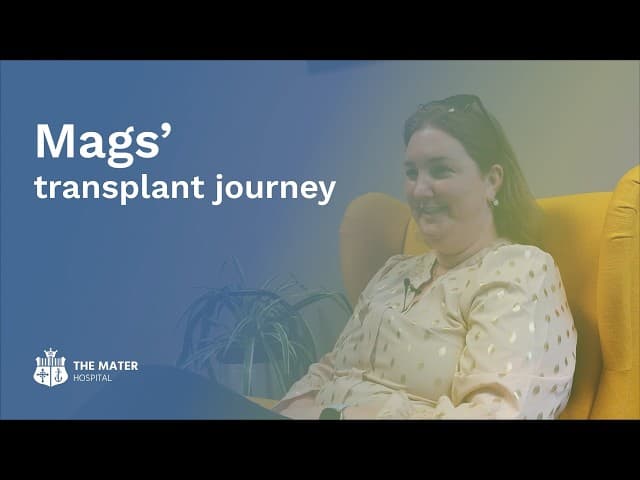
Mags · Pulmonary Fibrosis, Double lung transplant 2023
‘I definitely was in hospital longer than I had expected.’
Your privacy settings
In order to allow the use of this content on this website you must accept the use of miscellaneous cookies.